Essay
The Summer of São Martinho
The story is told every November. A Roman soldier named Martin, riding toward a city gate in the worst of a Gaulish winter, came upon a beggar with almost nothing on him. He drew his sword, cut his cloak in two and gave the man one half. The storm stopped, the sky cleared, and for three days it was summer again. That is the legend, and in Portugal children still hear it at school. What the north keeps of it, mostly, is the smoke.
By the middle of November the chestnut sellers are on the corners in Porto, with their tin carts and their paper cones, and the smoke goes up white and sweet into a sky that hasn’t decided what season it is. The scent arrives two streets before the cart does. The old saying holds the whole festival in three nouns, lume, castanhas e vinho, fire and chestnuts and wine. The warm days themselves are brief, a few soft afternoons wedged between the first rains, and nobody plans around them. They arrive, the city stands a little longer in the sun, and then they are gone.
The legend has a later footnote, harder to trace than the legend itself and possibly added centuries afterwards. It holds that the Roman army paid for half of a soldier’s cloak, so the half Martin gave away was the only half that was his to give. If that’s true, it was a very careful miracle. He gave everything he owned of that cloak and not a thread that belonged to the army, and the sky answered with half a summer.
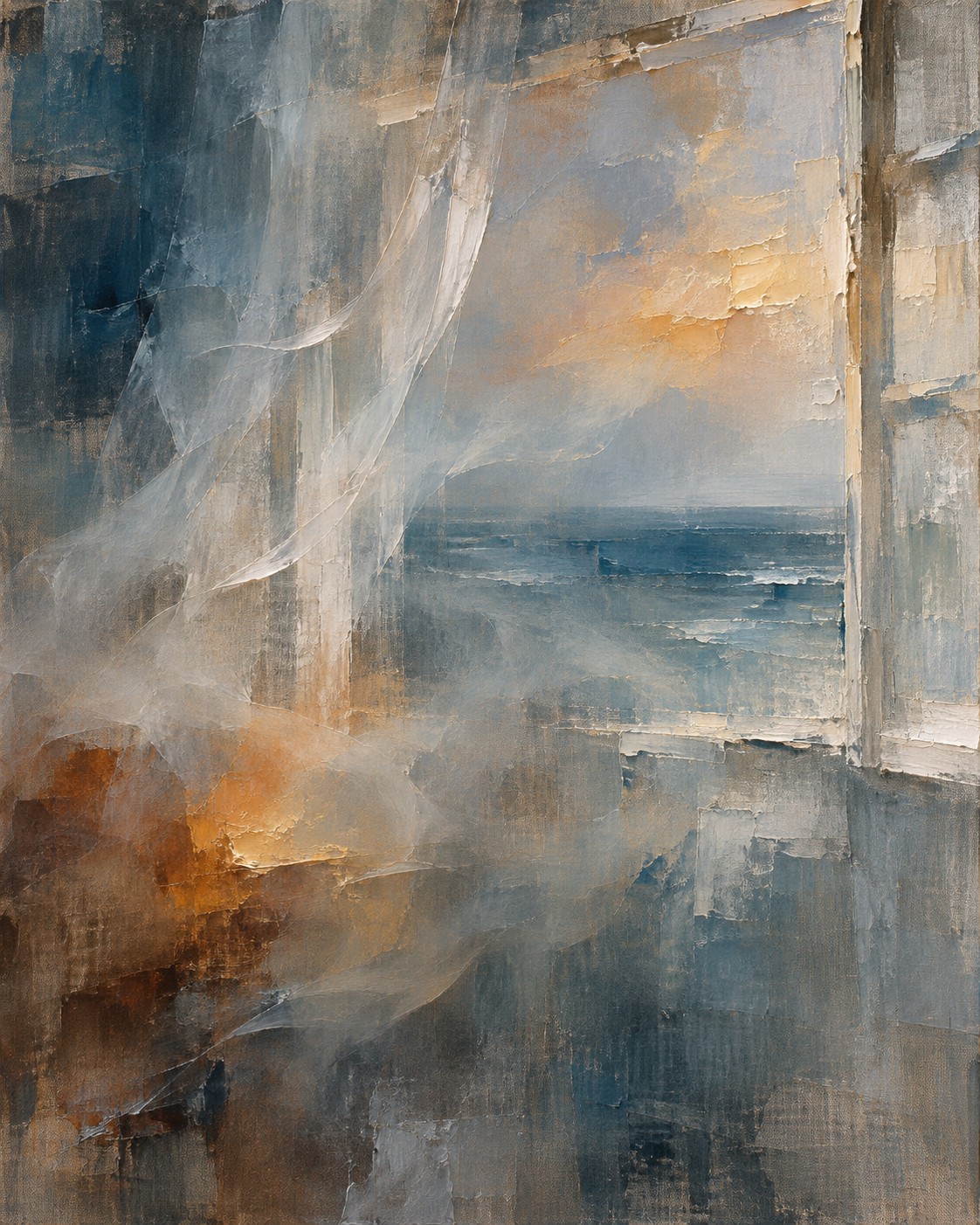
On the coast north of the city the season had other ingredients. The salt came up on the wind and mixed with everything else November was doing, wet leaves, a wood fire somewhere down the hill, chestnuts on the corner, the pines at the edge of the beach dark after rain. A mother’s window facing the sea let all of it in at once. Whoever grows up behind a window like that doesn’t think of it as a scent. It is simply the air of the house, the way the light off the water is simply the light. We don’t notice the things that are only there.
Many of us who grew up on that coast now live on the other side of the ocean it faces. Here the leaves turn loudly, red and orange in a way that photographs well, and in November it can feel as if the colours are changing on both shores at once. Then, with no warning, the scent comes. There are no chestnut carts on these streets, so it isn’t coming from outside. It comes from somewhere further in. For a second the window is there, the salt and the smoke are in the same breath, and the sill is almost close enough to touch.
We are told that memory fades, that time works on it like a slow eraser. That isn’t quite what happens. What fades is the ability to call a memory on purpose. Nobody can decide to stand at a window half a life and an ocean away. The window decides. And when it comes it brings company, the way one open door lets the whole draught into a house. The sound of the waves at night. A love that was, years ago, and left the way the tide leaves, without arguing. The soft skin of a mother’s face.
All of it distant, all of it gone in the ordinary sense, and all of it, for that second, here. We spend so much effort keeping things, photographs and letters and the right objects in the right drawers. And the thing that actually carries them is the one nobody can keep at all. A scent. A season. Three warm days in November that a saint is said to have earned with the half of a cloak that was his.
Perhaps that is what the summer of São Martinho is. It’s too short to be a summer, and it comes too often to be a miracle, though never so reliably that anyone counts on it. It is closer to a permission. The cold steps aside for an afternoon and lets something earlier stand in the street again, long enough to be recognised, and then the rain returns. Nobody is surprised, and nobody who stood in the sun is sorry.
If the scent finds you this week, on a street with no cart and no fire and no sea anywhere near it, let it stand there as long as it will. For a second the window is open again, and the whole house is breathing the sea.
Feedback, a suggestion, or just hello? Write to me at [email protected].
One email when something new goes up. Nothing else.
And a book for your trouble.